A crack in the cladding calls for a record of its location and appearance, even when the cause isn't clear.
50 Illustrated Maps of Facade Anomalies
Identify facade anomalies with +50 Illustrated Inspection Maps.
Identify facade anomalies with +50 Illustrated Inspection Maps.
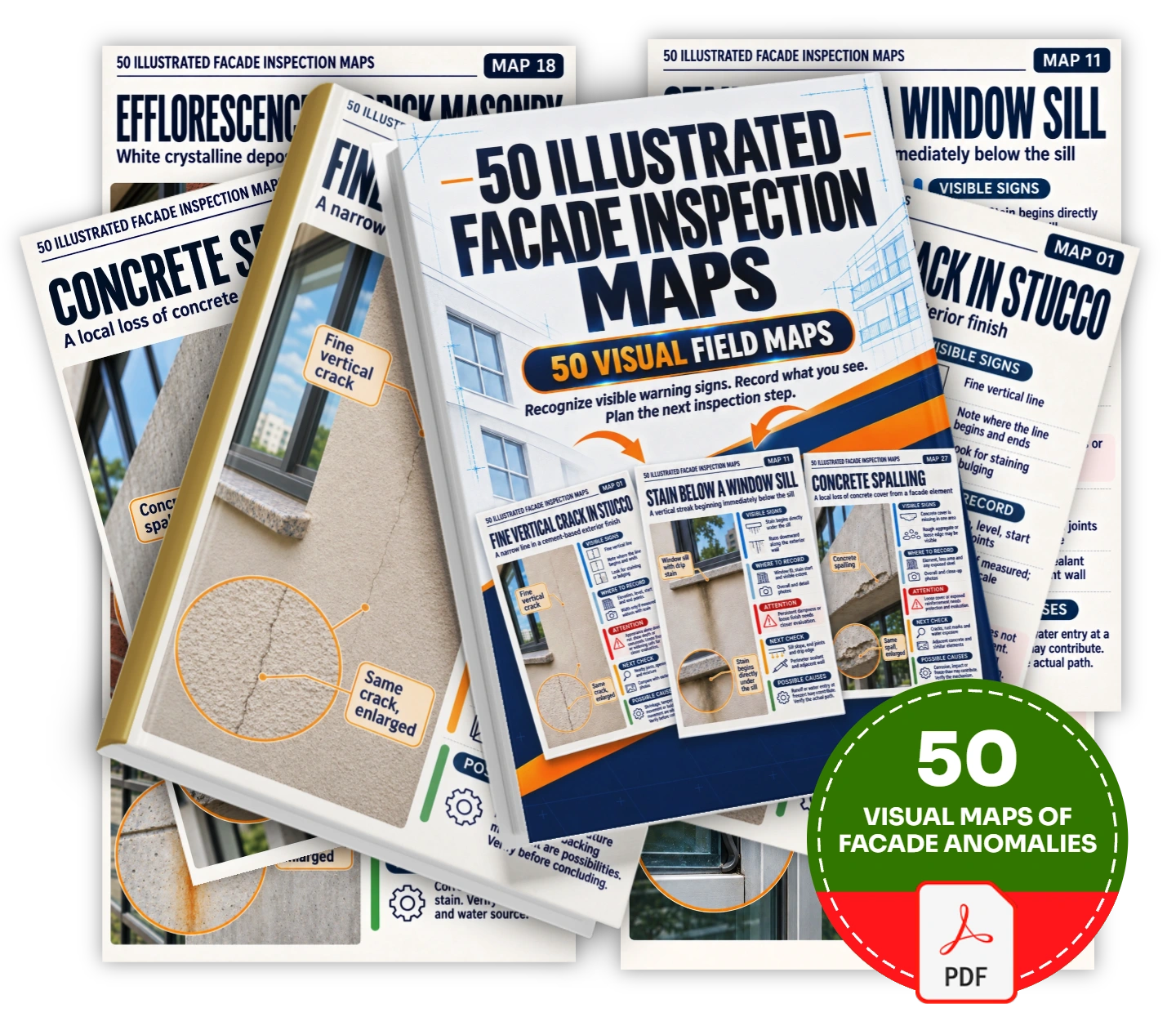
During an inspection, open the map for the condition you find, compare the illustrated signs, and record where it appears. The guidance helps you choose nearby areas that warrant further investigation.
Compare visible signs with illustrations of anomalies.
Record the condition's location and appearance.
Identify adjacent areas to examine.
Sent by email and WhatsApp after your purchase is confirmed
During an inspection, similar-looking signs call for careful observation.
During an inspection, similar-looking signs call for careful observation.
Stains near window and door frames call for a closer look at the junctions and surrounding areas.
Ceramic tiles with detached edges call for examining that section and the surrounding signs.
Joints and sealants may have gaps that need to be located in the inspection record.
Changes in the concrete and signs of corrosion call for a description of what's visible.
Stains, streaks, and peeling paint also deserve specific attention.
The maps help distinguish observed signs from possible causes that still need to be investigated.
See how the anomaly maps are visually organized.
See how the anomaly maps are visually organized.
Each map brings together illustrated signs, items to document, possible causes to investigate, and adjacent areas to examine.
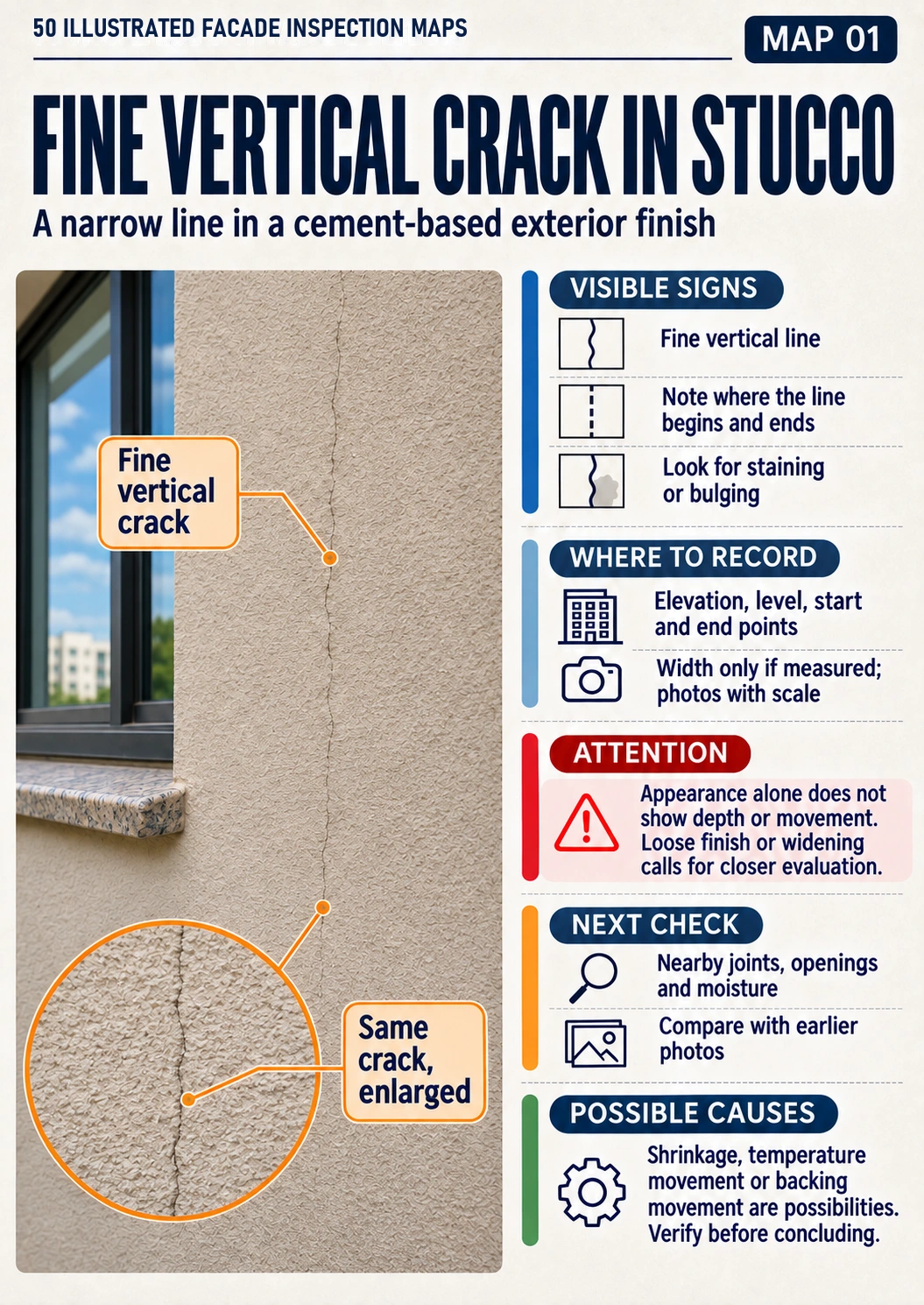
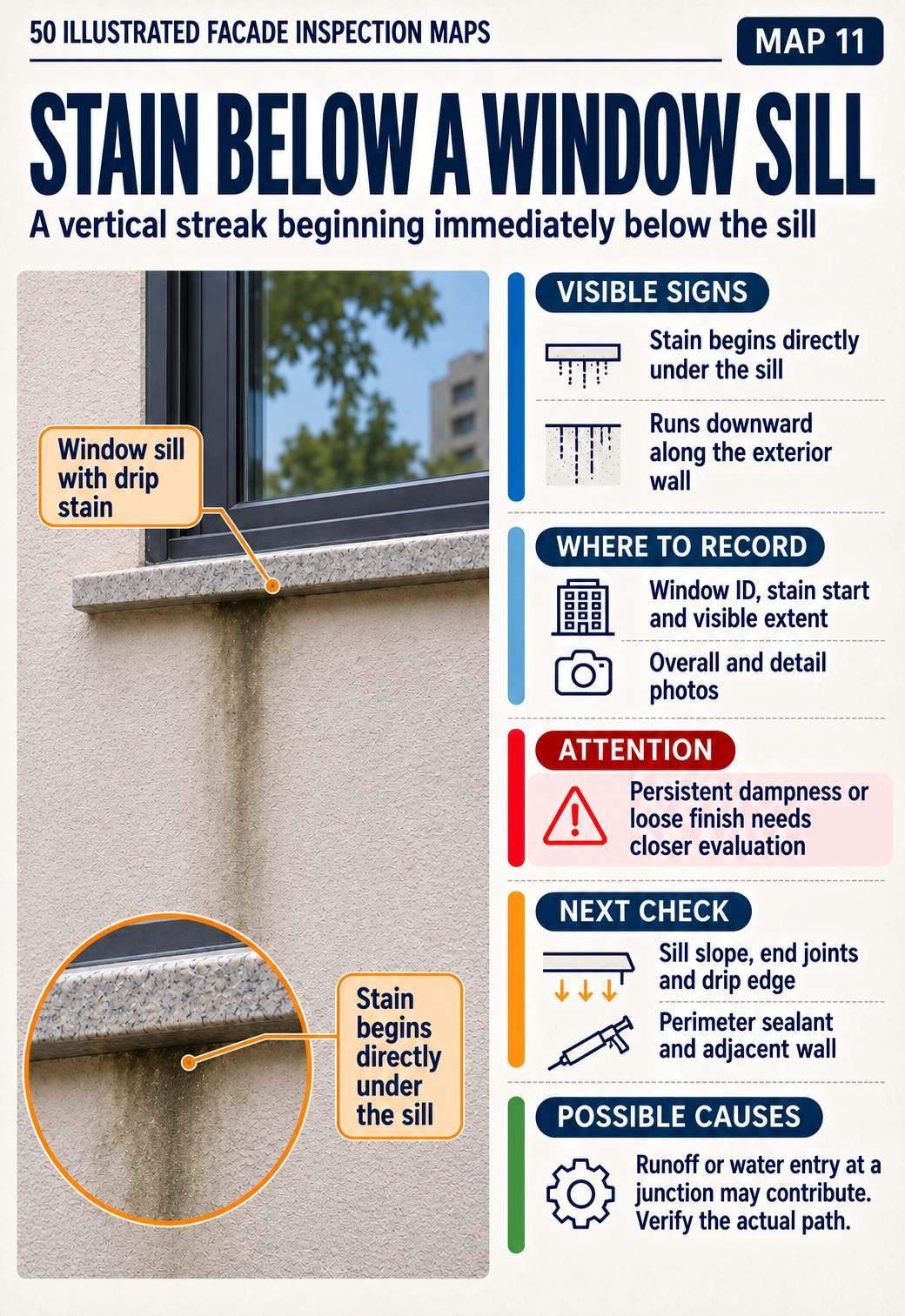
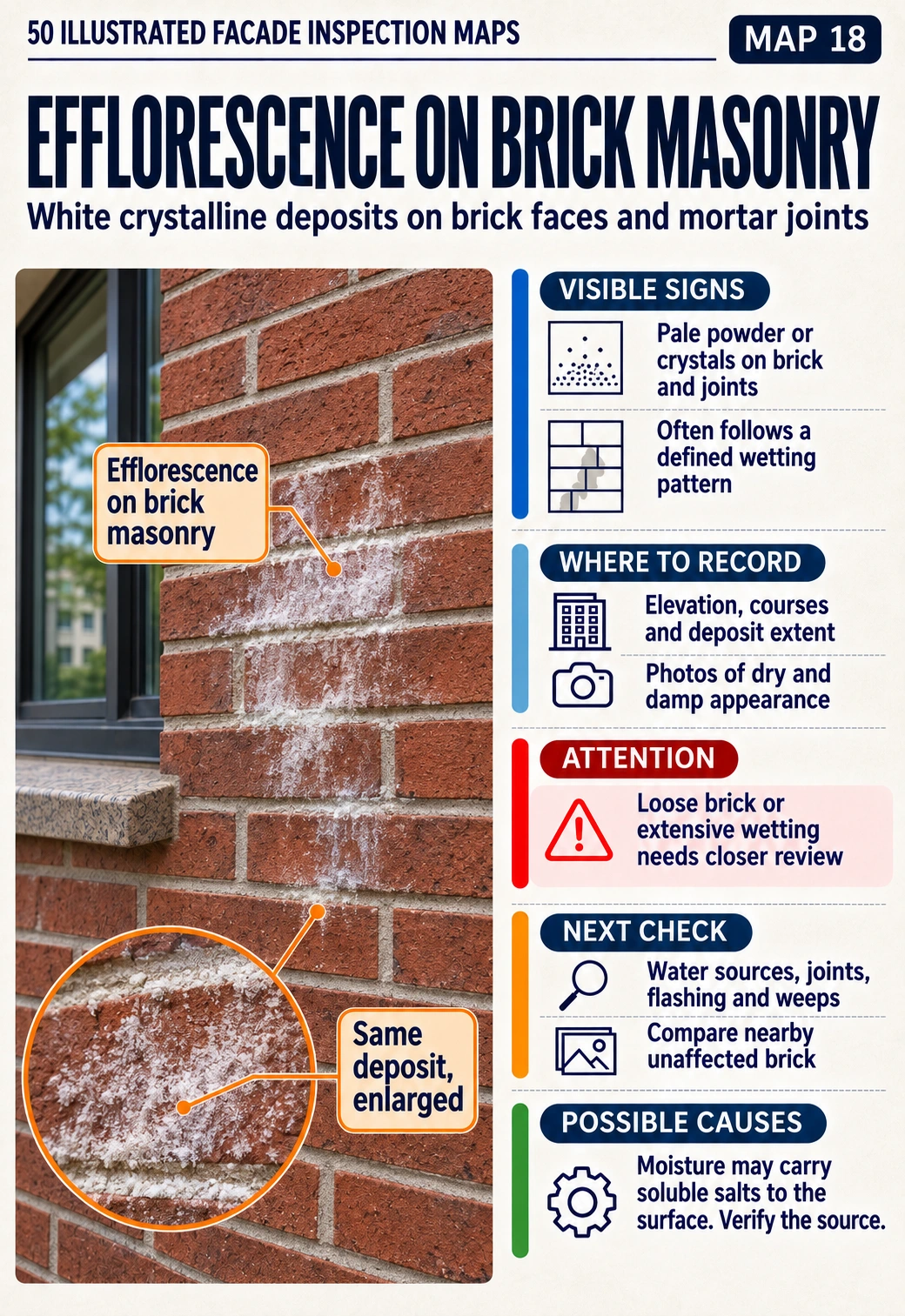
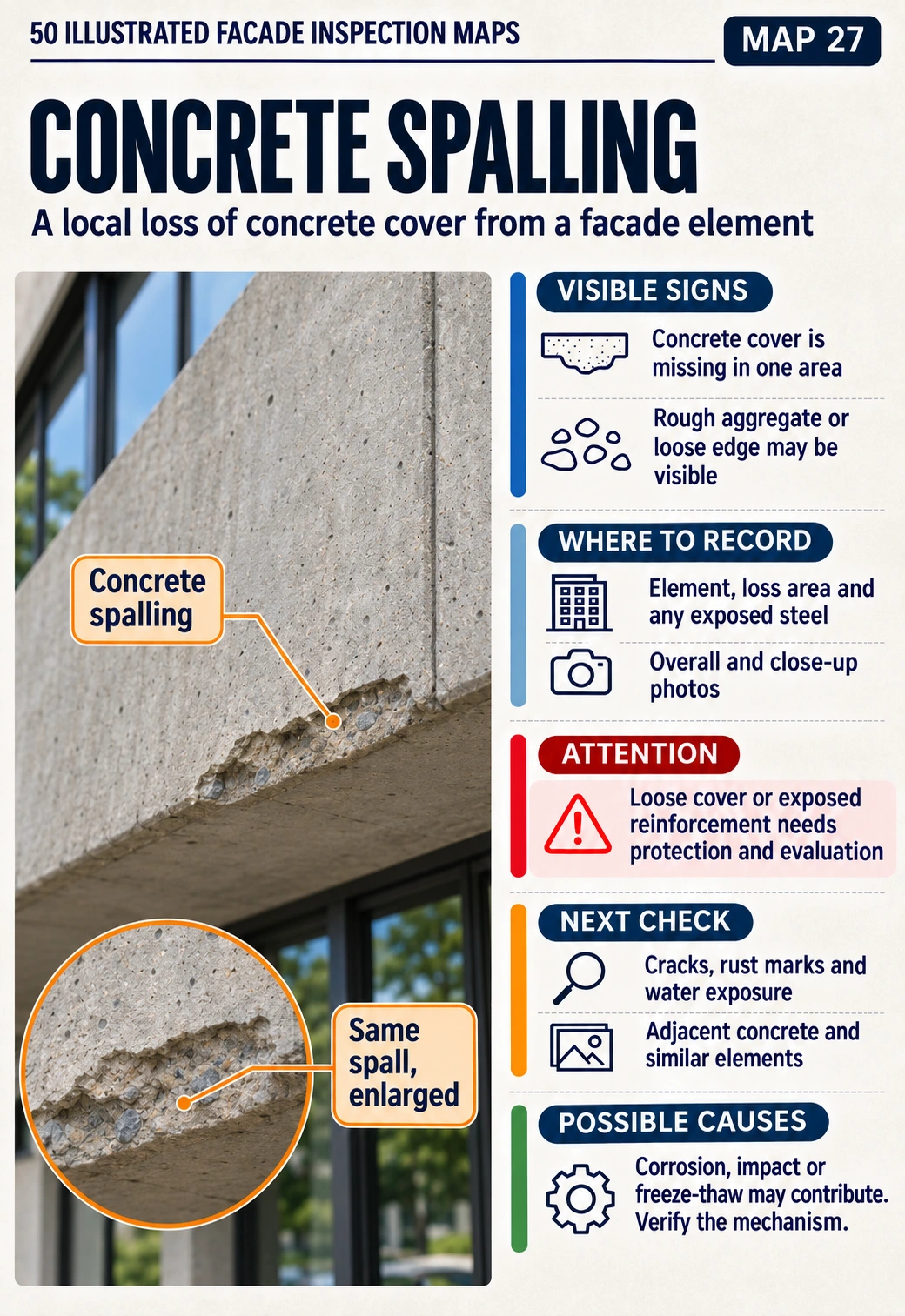
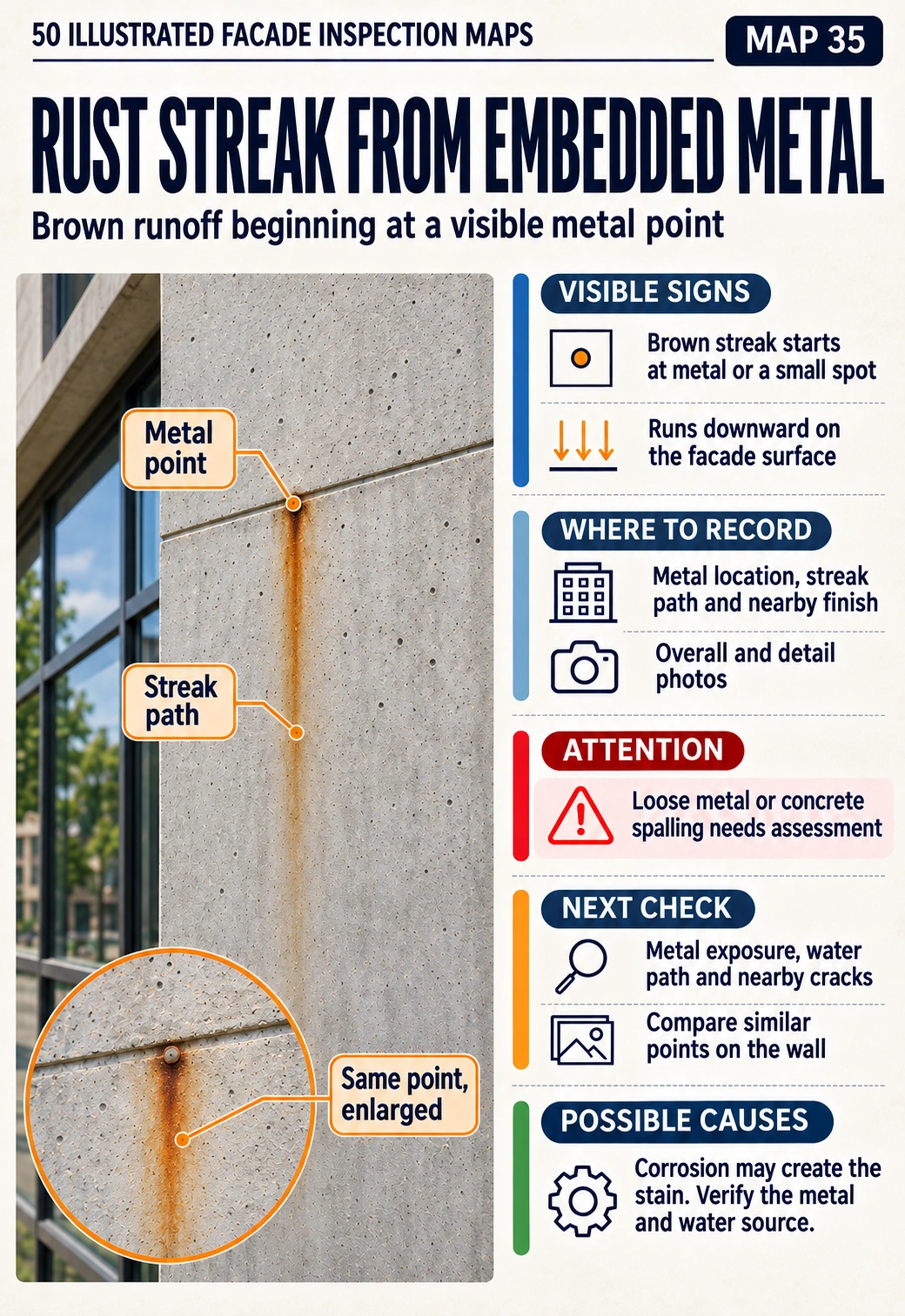
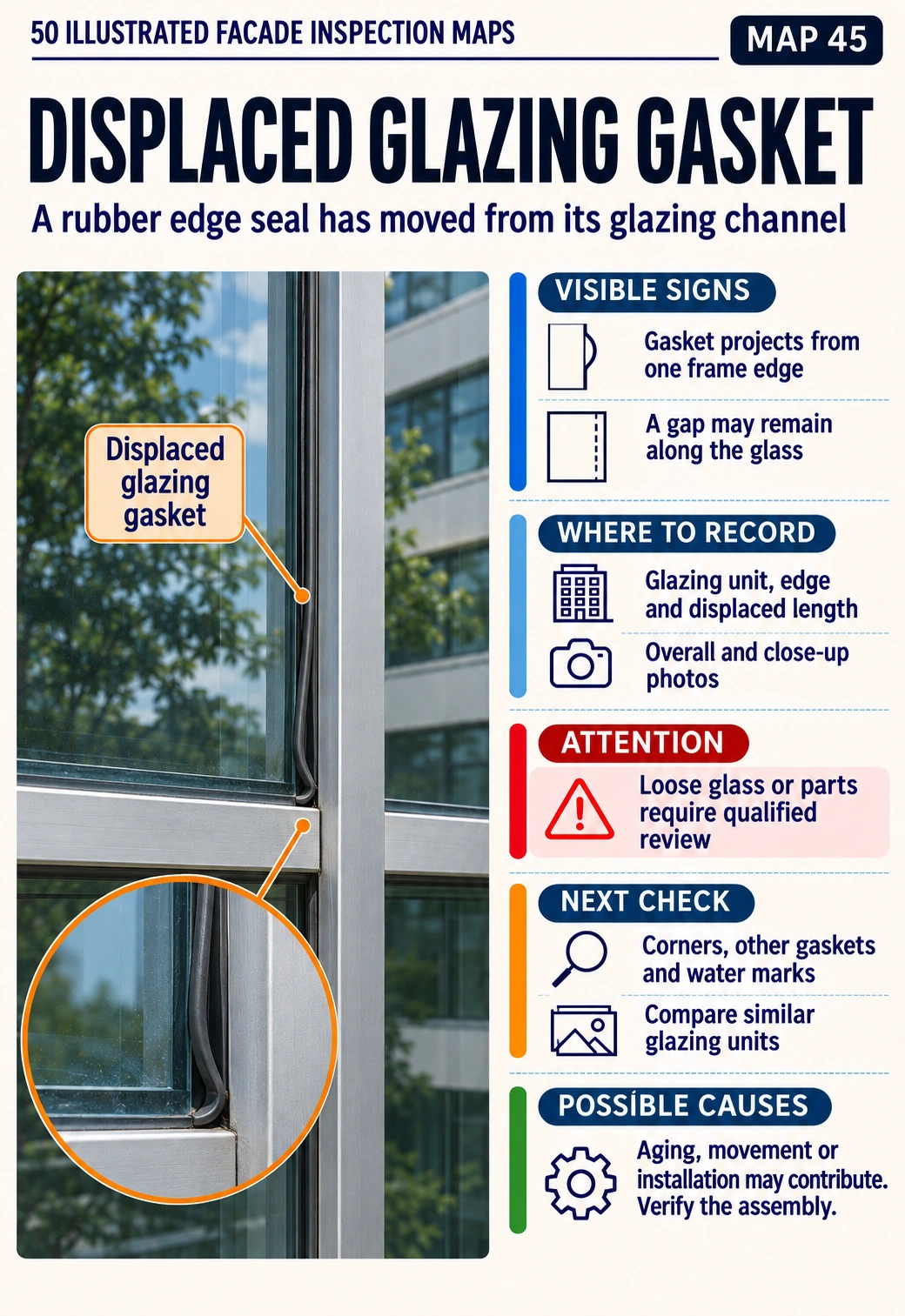
From observed signs to what to investigate next.
From observed signs to what to investigate next.
Locate the issue.
Locate the issue.
During the inspection, select the map for the visible condition you found on the facade.
Compare the signs.
Compare the signs.
Look at the illustrations and check which characteristics are present in the area you're inspecting.
Document what you saw.
Document what you saw.
Note the issue's location and appearance without presenting a possible cause as an established fact.
Decide what to examine.
Decide what to examine.
Review the areas that need attention, adjacent areas, and possible causes to investigate.
Each map covers one anomaly, from observing its signs to documenting it and investigating it further.
The same issue is easier to assess when its signs have a visual reference.
The same issue is easier to assess when its signs have a visual reference.
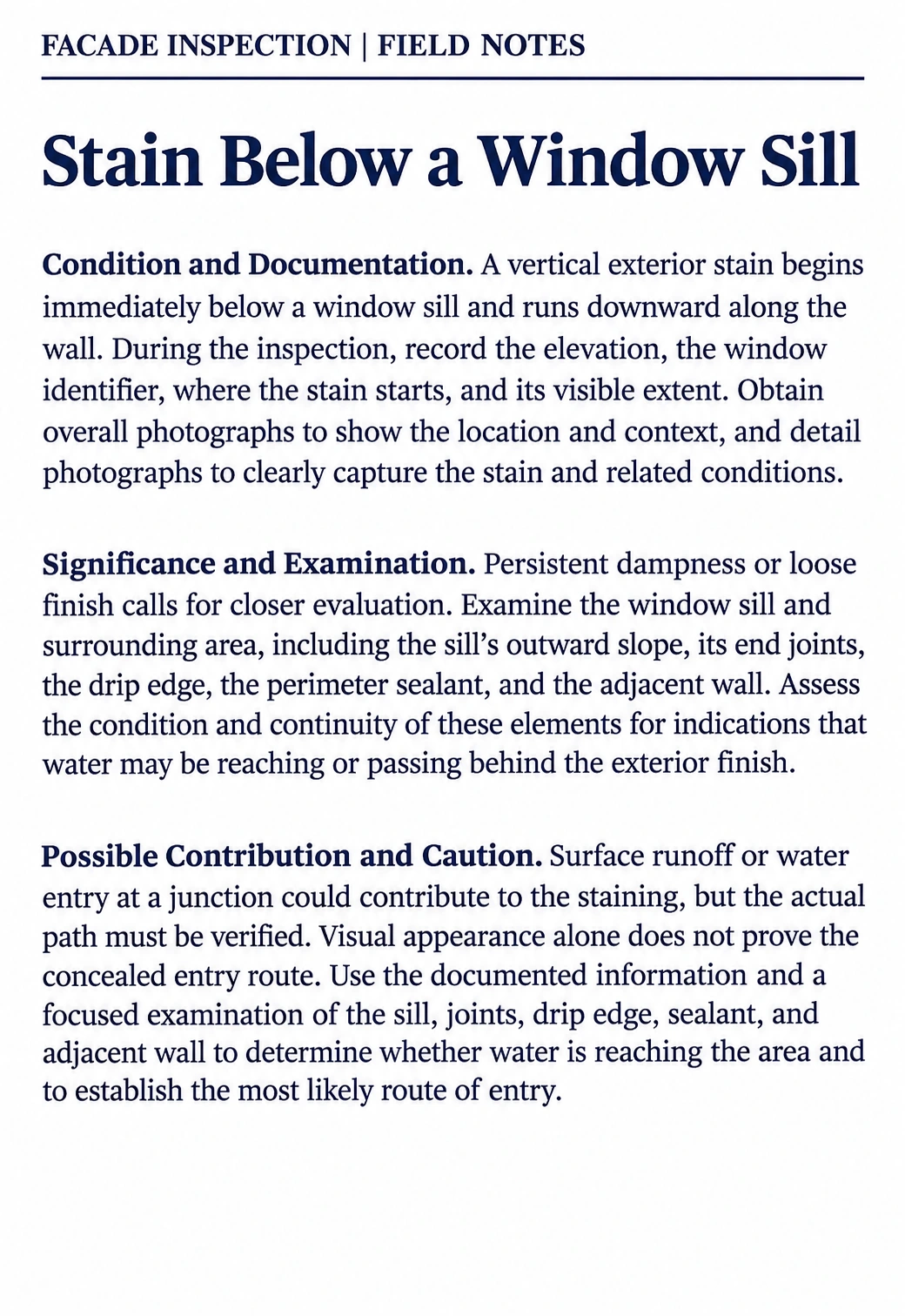
Written description
Visual reference
Instead of searching through a lengthy description during the visit, use the illustration to identify the signs and check the map's documentation and investigation items.
The illustration guides observation; a technical conclusion depends on investigating the issue.
I want to document the signs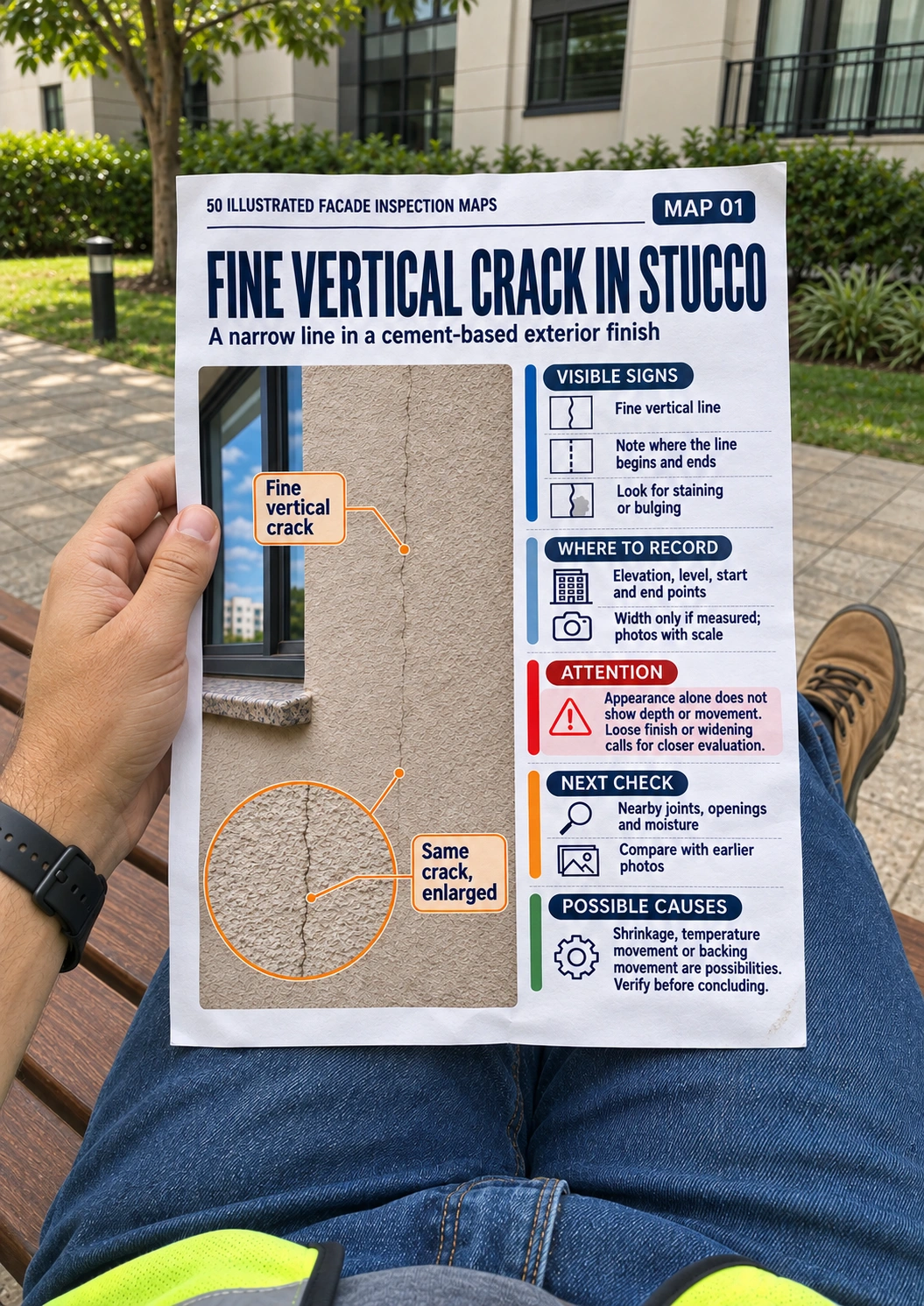
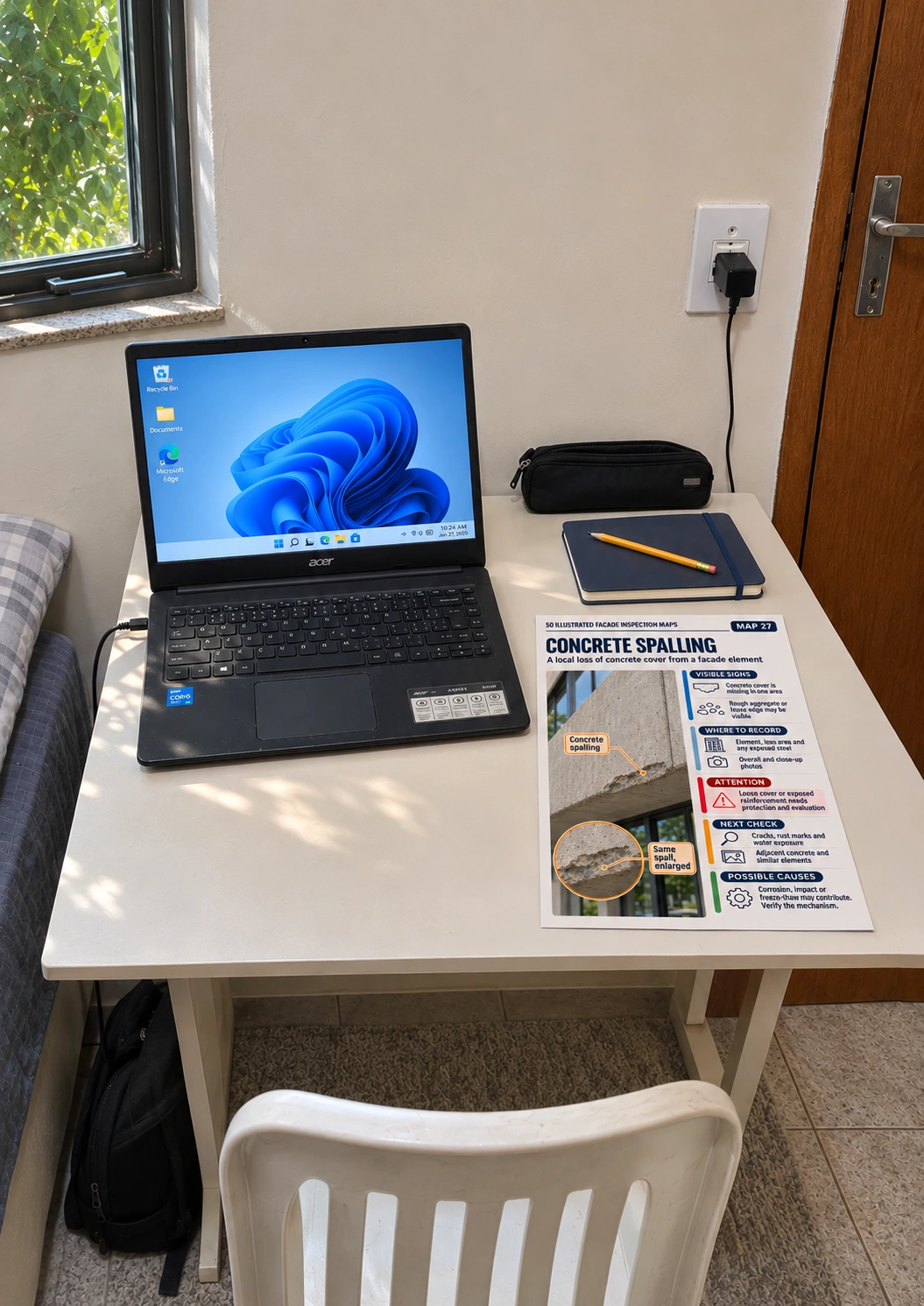
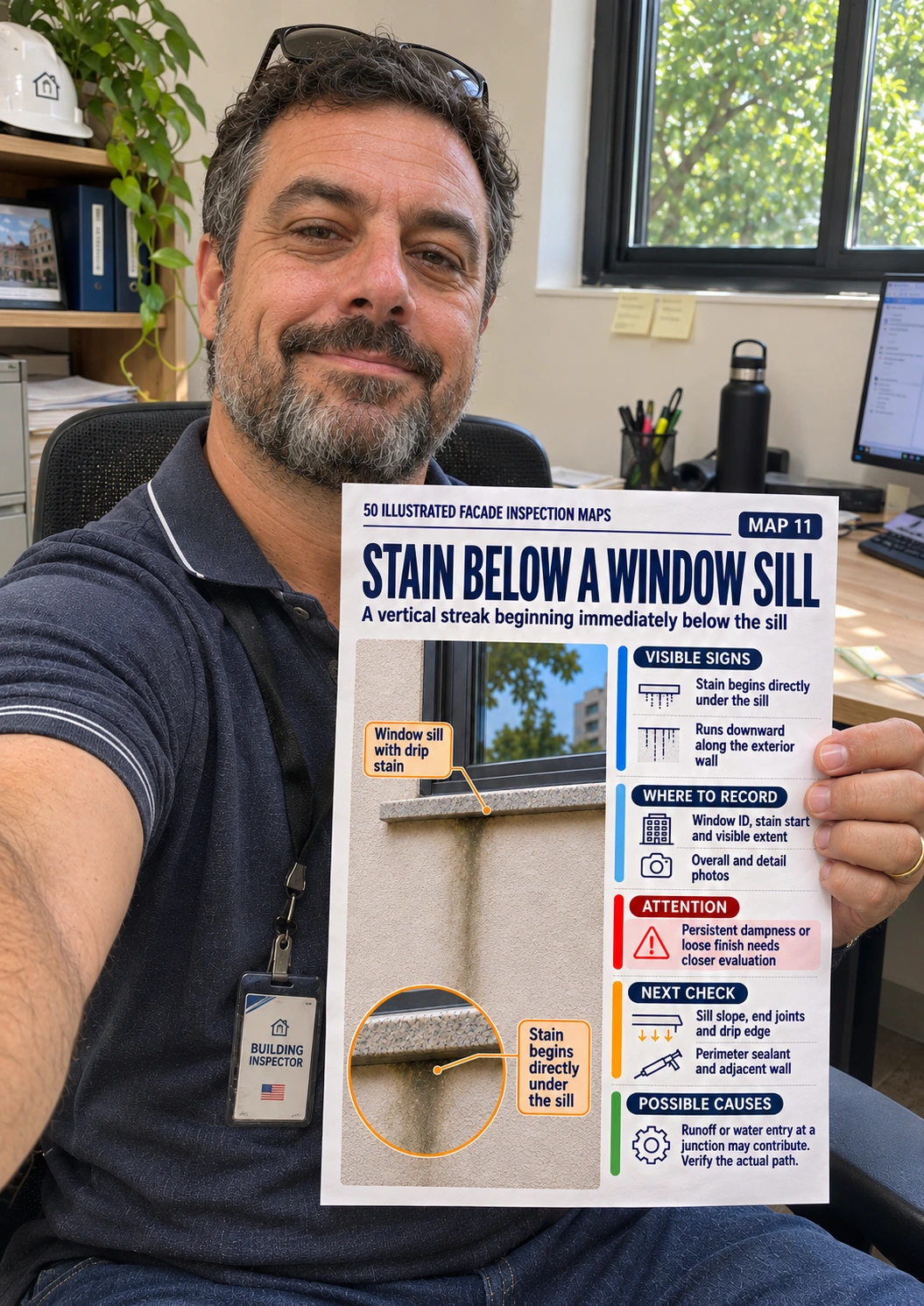
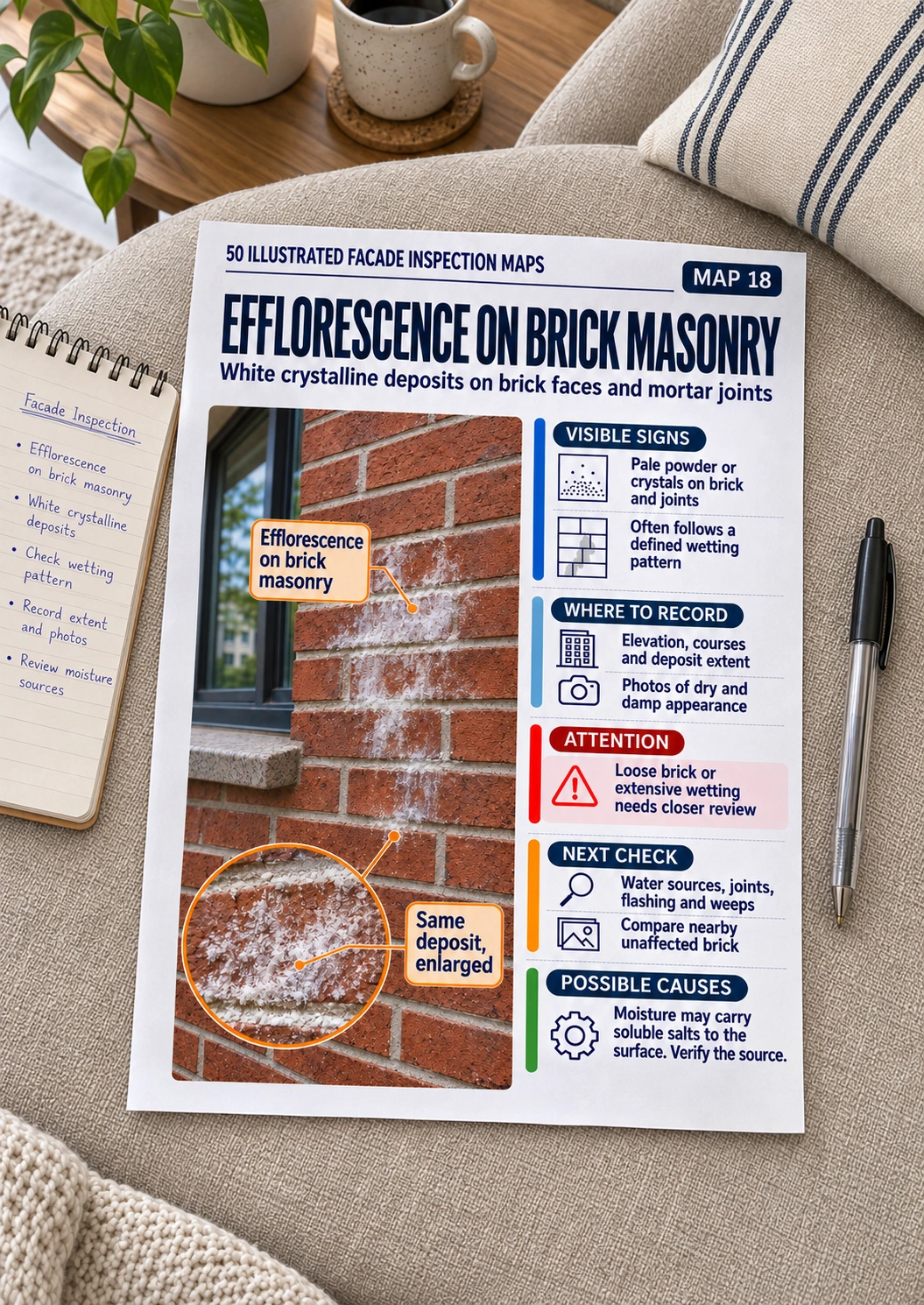
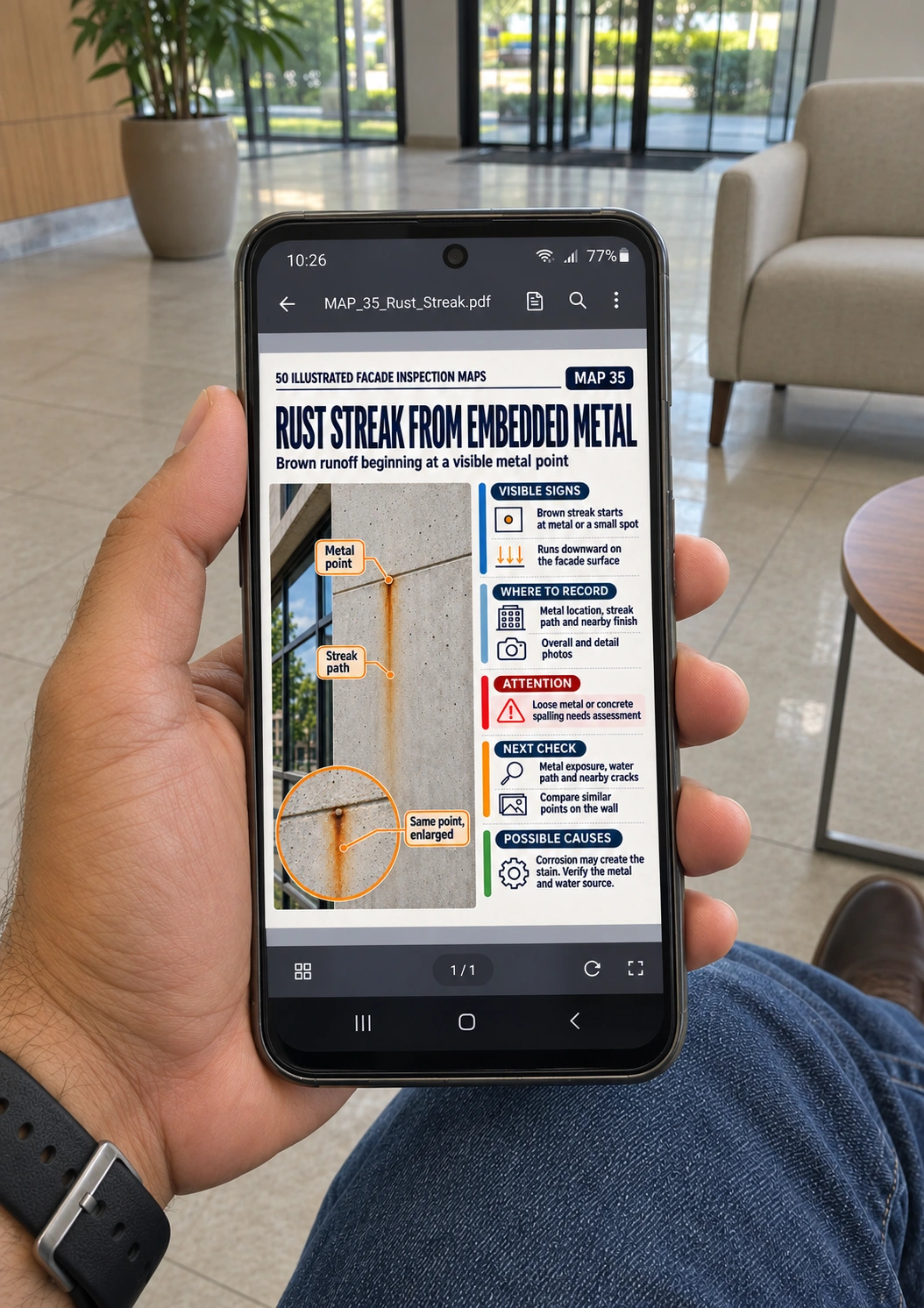
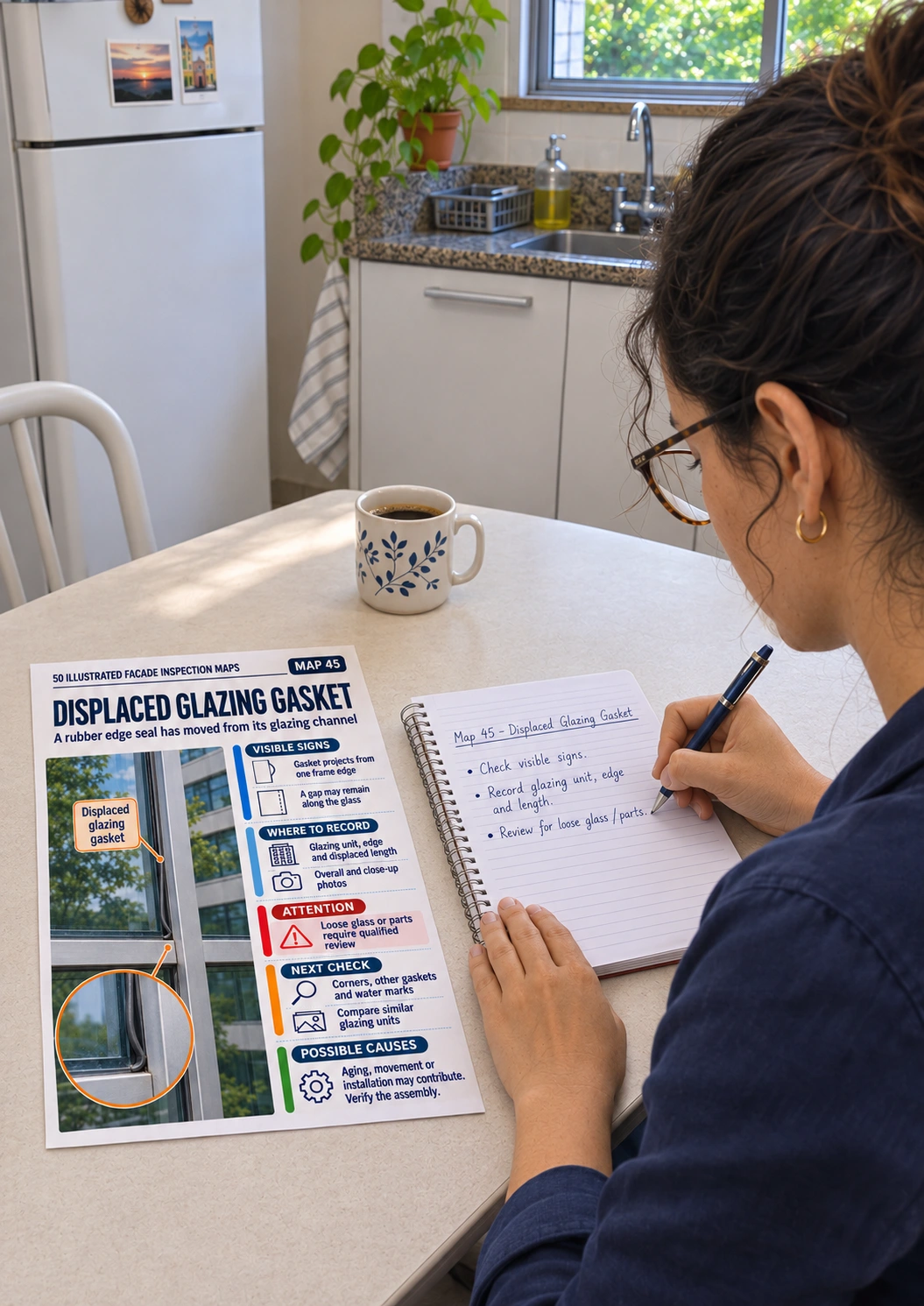
When you encounter a problem, have a reference to guide what you observe and record.
When you encounter a problem, have a reference to guide what you observe and record.
Consult the relevant map during the inspection, and note the visible sign and its location before deciding which areas to examine.
For professionals who observe and document facade anomalies.
For professionals who observe and document facade anomalies.
Civil engineers conducting inspections.
Civil engineers conducting inspections.
Compare visible signs of deterioration in facade cladding and record the location of the area observed.
Architects inspecting facades.
Architects inspecting facades.
Refer to illustrated signs in window and door frames, joints, and finishes during the site visit.
Building inspection professionals.
Building inspection professionals.
Use the maps as a reference to describe observed conditions and locate areas to examine.
Anyone who encounters loose ceramic tiles.
Anyone who encounters loose ceramic tiles.
Look at tile edges, grout joints, and nearby signs, while always following the visit's safety requirements.
Anyone who needs to document stains.
Anyone who needs to document stains.
Locate the stain on the facade and examine nearby junctions before assigning a cause.
Anyone who observes cracks in the cladding.
Anyone who observes cracks in the cladding.
Describe the visible sign and its location, even when its origin still needs to be investigated.
An organized guide to anomalies for observing, documenting, and investigating.
An organized guide to anomalies for observing, documenting, and investigating.
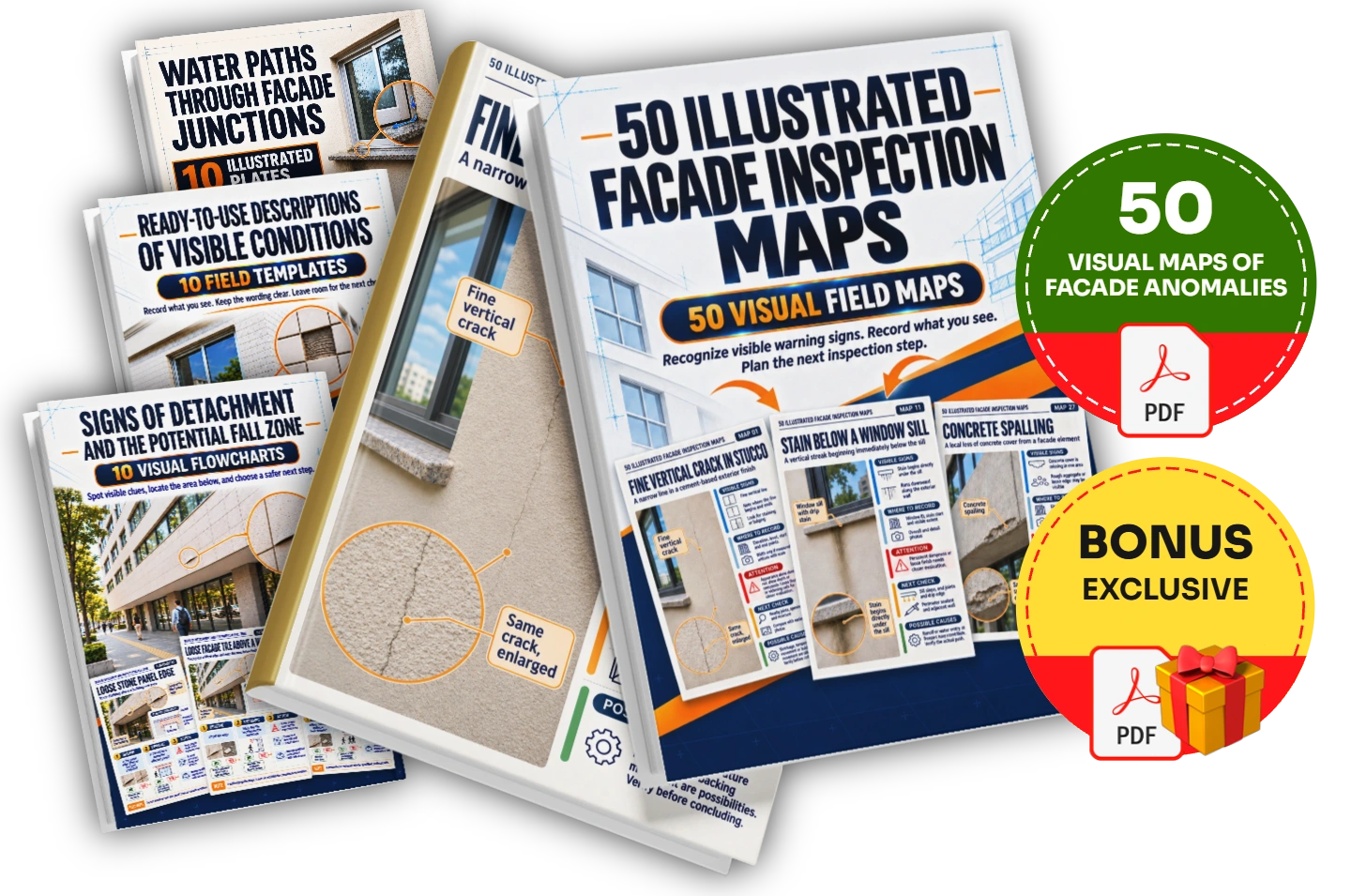
A visual reference guide for inspections.
50 Illustrated Maps of Facade Problems
50 Illustrated Maps of Facade Problems
Maps organized by visible signs.
Look up one anomaly at a time, with maps grouped by facade elements and finishes.
Illustrated signs.
Compare illustrations of cracks, stains, detachment, and other visible signs.
References for documenting observations.
Note the location and appearance of the area observed during the inspection.
Areas to check.
Review possible causes to investigate and nearby areas worth examining.
Indicated attention level.
Check the attention level indicated for the anomaly described on the map.
Ways to investigate.
Consult guidance on investigating, preventing, or correcting the observed condition.
Supplementary materials for observing and documenting conditions.
Take your inspection further with the approved bonuses on safety, documentation, and moisture.
Take your inspection further with the approved bonuses on safety, documentation, and moisture.
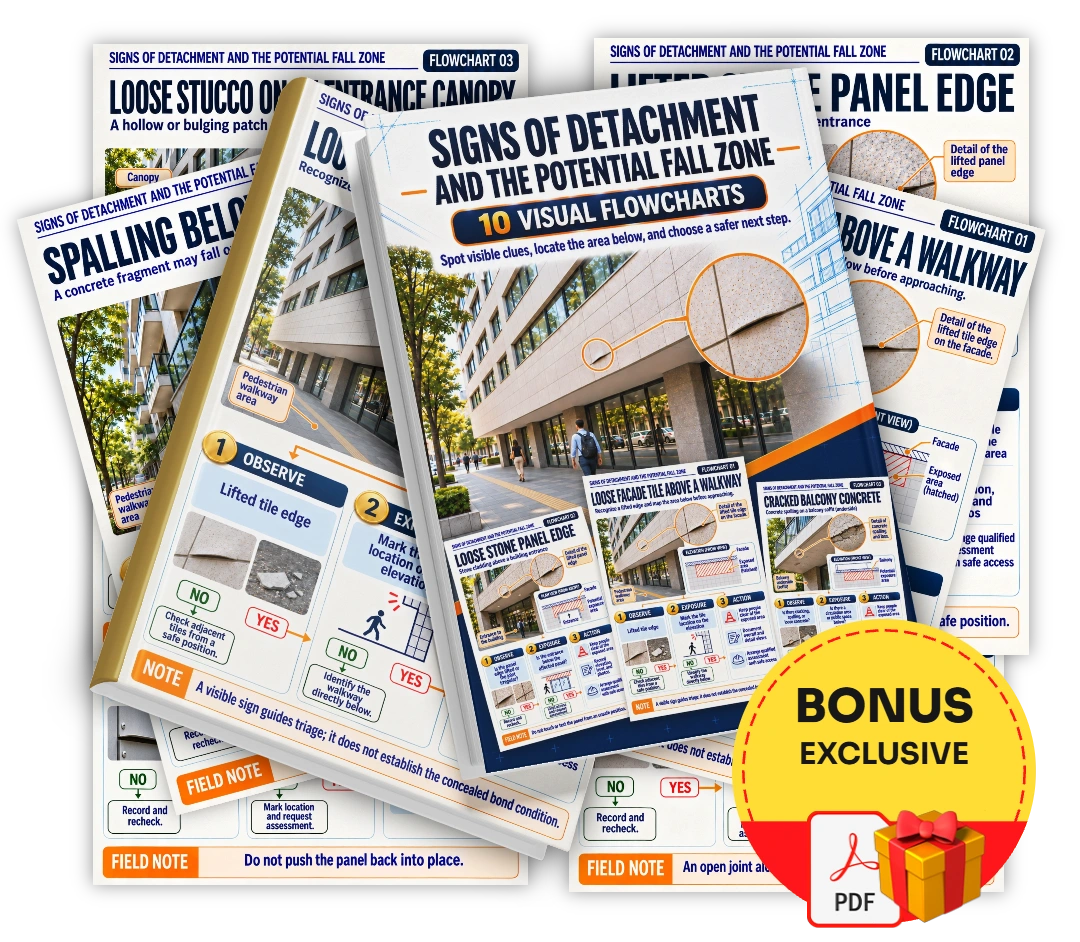
BONUS #1
Signs of Detachment and the Potential Fall Zone
Visually identify signs of unstable pieces and mark the area exposed to falling pieces.
BONUS #2
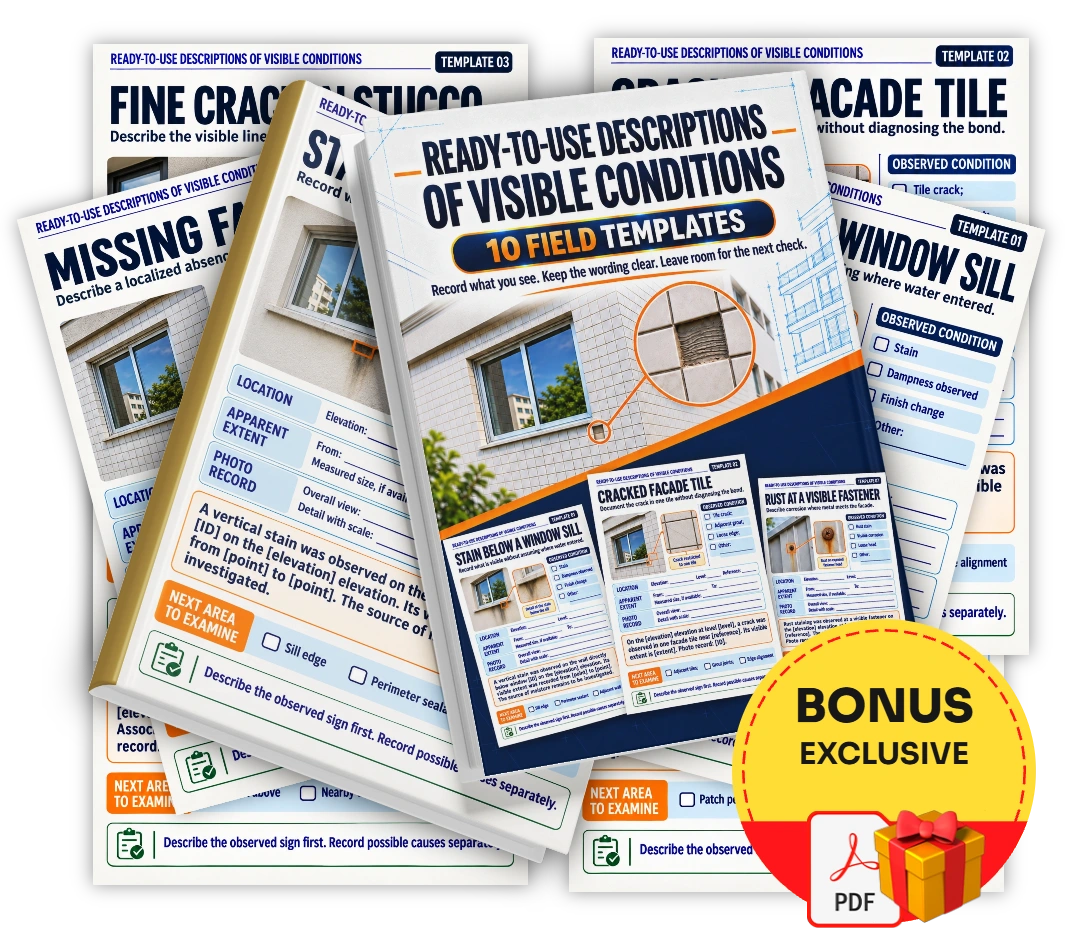
Ready-to-Use Descriptions of Visible Conditions
Fill in sentence templates with the location, observed sign, and apparent extent of the condition.
BONUS #3
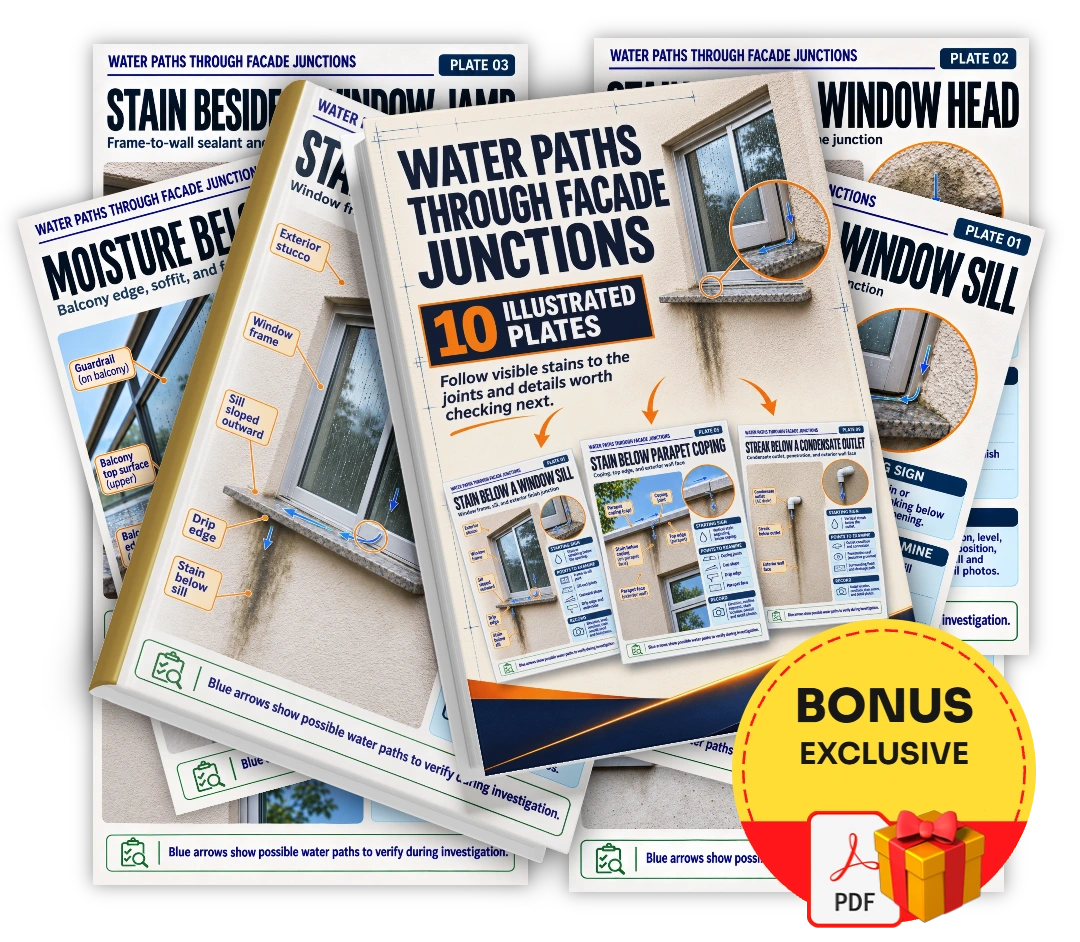
Water Paths Through Facade Junctions
Follow drawings of facade junctions to locate points to examine when you see staining or moisture.
The main guide, accompanied by supplementary materials.
Choose the complete set for your facade inspections.
Choose the complete set for your facade inspections.
The complete option brings together the anomaly maps, detachment flowcharts, description templates, and facade junction diagrams.
BASIC PLAN
BASIC PLAN
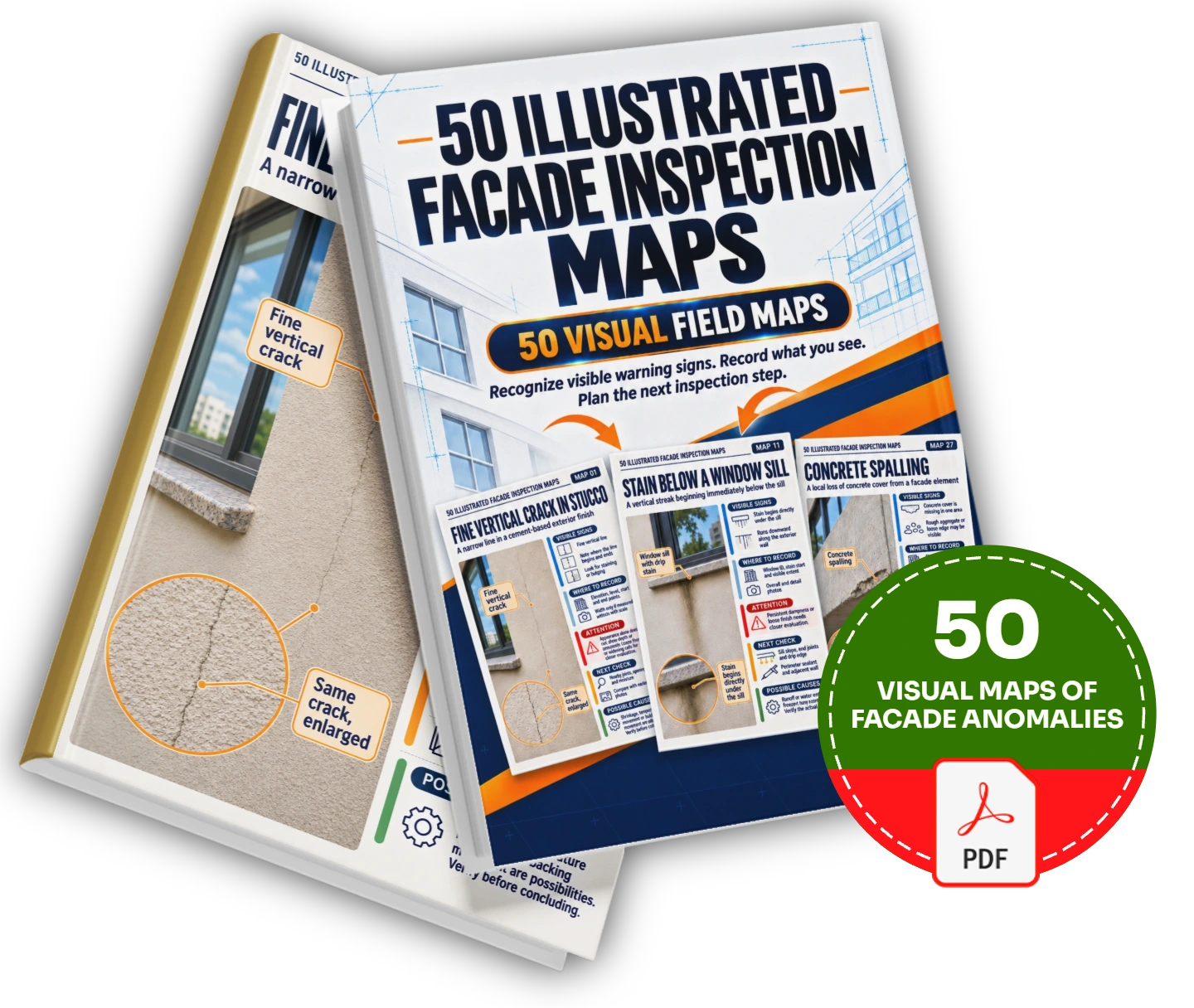
50 Illustrated Maps of Facade Problems
Illustrated e-book / visual guide
COMPLETE PLAN
COMPLETE PLAN
50 Illustrated Maps of Facade Problems
Individual maps of facade anomalies
Illustrations of signs and markings of points to observe
Possible causes to check and level of attention needed
Signs of Detachment and the Potential Fall Zone
Ready-to-Use Descriptions of Visible Conditions
Water Paths Through Facade Junctions
Document the sign before investigating the cause.
Document the sign before investigating the cause.
Open the anomaly map during the inspection to compare the signs and identify points that still need to be examined.
Lifetime guarantee for 50 Illustrated Maps of Facade Problems
Lifetime guarantee for 50 Illustrated Maps of Facade Problems
This means that at any time, if you feel that:
The material doesn't fit your routine
The product doesn't help you meet your goal
Or you simply don't want to keep the product
👉 You can request a refund.
No time limit.
No red tape.
No explanation required.
We offer this guarantee because we believe in the material's practical value.
You're not buying a promise.
You're buying organized material to make your routine easier.
If it's not right for you, we take on all the risk.
How to receive the guide and start using it.
How to receive the guide and start using it.
Choose a purchase option.
Choose a purchase option.
Select the option you want to receive the materials included with it.
Wait for confirmation.
Wait for confirmation.
The materials are sent after your purchase is confirmed.
Receive and review the materials.
Receive and review the materials.
The materials are sent by email and WhatsApp; open the map for the condition you want to examine.
Questions about the maps and using them in the field.
Questions about the maps and using them in the field.
What's included in each map?
What's included in each map?
Each map covers one facade anomaly, with illustrations of visible signs, possible causes to check, an attention level, items to document, and points to investigate next.
Can I use the maps during an inspection?
Can I use the maps during an inspection?
Yes. The digital guide is designed for use on-site: select the map that matches what you've found, compare the signs, and document the location and appearance of what you observed.
Do the maps identify the definitive cause of an anomaly?
Do the maps identify the definitive cause of an anomaly?
No. The material presents visible signs and possible causes to check. Use it to guide your observations and document what you see; determining the cause requires investigation.
How should I handle signs of unstable components?
How should I handle signs of unstable components?
Observe from a safe position. Where there is a risk of falling components or work at height, the inspection requires cordoning off the exposed area and ensuring safe access. The flowcharts in the complete set help you mark and document visible signs.
What does the complete option add to the guide?
What does the complete option add to the guide?
In addition to the main guide, it includes flowcharts on detachment and the potential fall zone, templates for describing visible conditions, and reference sheets on facade junctions and possible water paths.
How will I receive the materials, and what is the guarantee?
How will I receive the materials, and what is the guarantee?
The materials are sent by email and WhatsApp after your purchase is confirmed. The approved offer includes a lifetime, unconditional guarantee.
A visual reference for your next inspection.
Observe the sign, document the area, and investigate with care.
Observe the sign, document the area, and investigate with care.
Use the maps by anomaly to compare visible signs and note which areas of the facade need further examination.